Japan Beyond the Itinerary
A historian once wrote that the Japanese are just like everybody else, only more so. After years of building Japan itineraries and traveling there with my own family, I have never found a better six words for the place.
Everything you already know about Japan is true. What follows is what I book for clients once the famous things are handled.
Stay in a ryokan
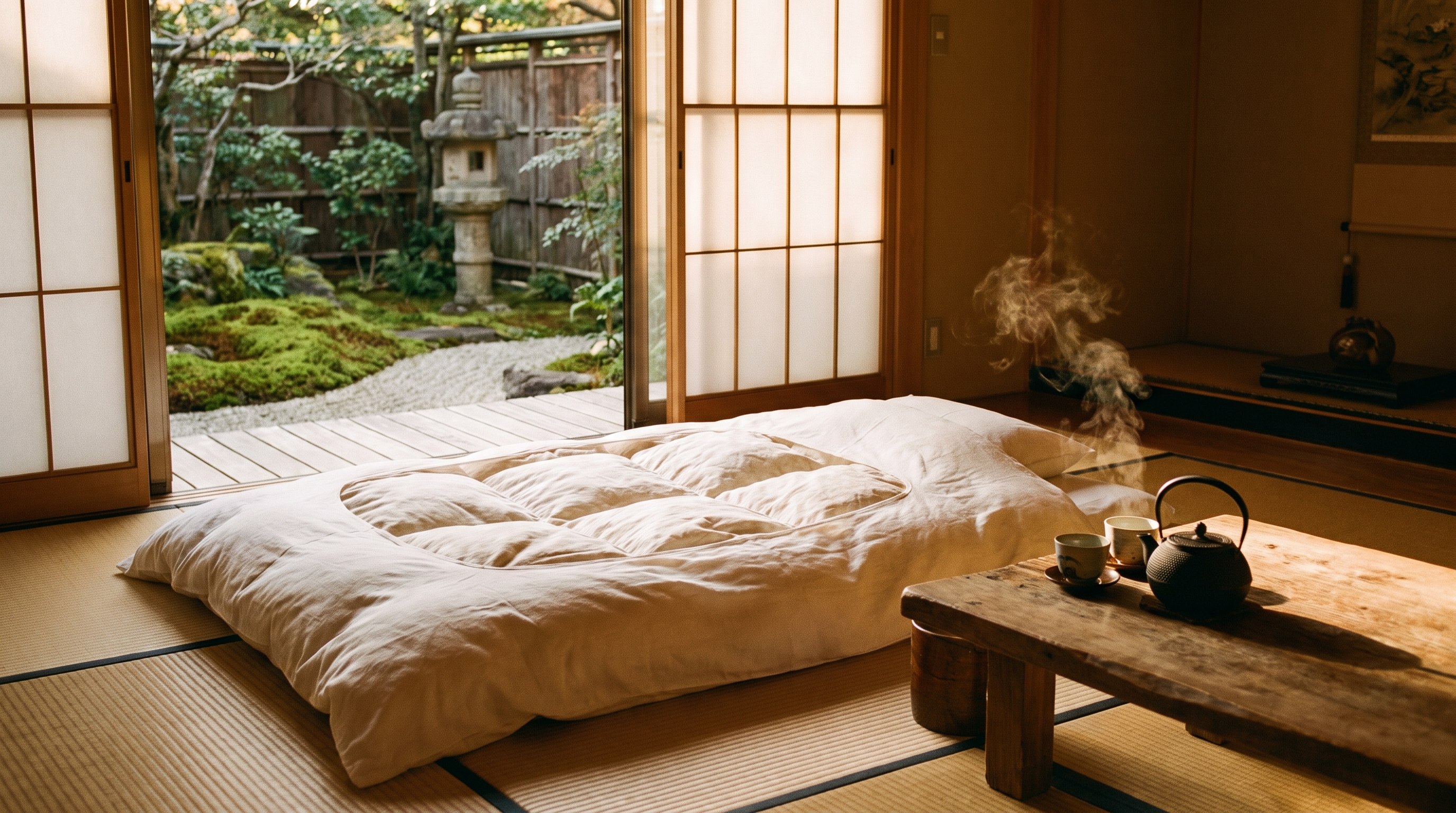
A ryokan is a traditional inn, descended from the lodgings that fed and bathed travelers on the old walking roads. Dinner and breakfast are part of the stay, often kaiseki, a procession of small courses built on whatever is precisely in season. Many sit over natural hot springs, the onsen that give whole towns their names.
My daughter took her first steps at a ryokan in Kaga Onsen. I mention that not as a travel tip but as an explanation: something about these places slows a family down until the important things have room to happen.
Meet the craftsmen
In Japan, nobody casually decides to become a sushi chef, a knife maker, an indigo dyer, a sake brewer. Every craft carries decades of intention, and with the right introductions the doors open: an afternoon at a master’s bench, a brewery tasting drawn straight from the cedar, a kintsugi lesson where broken ceramics are repaired in gold.
The technique is worth seeing. The mindset behind the technique is worth the flight.
It is not just watching how sushi is made or how indigo is dyed. It is getting inside the preparation and the mindset behind it. That is what stays with you.
Christian Gibney
Sleep among monks
On Kōyasan, temple lodgings take guests: tatami rooms, vegetarian temple cuisine, and an invitation to morning prayers beside the resident monks. You wake to bells instead of an alarm. One night is enough to recalibrate an entire trip.
When to go
Late November catches the maples at their exact week in Kyoto; spring brings the cherry blossom crowds and prices to match. We plan around what you want to stand under. Ask us where to be standing, and when.
Good questions
What is the difference between a ryokan and a hotel?
A ryokan is a traditional inn where dinner and breakfast, usually multi-course kaiseki, are part of the stay, rooms are tatami with futon bedding, and baths are often natural hot springs. It is an experience, not just a bed.
Are temple stays in Japan worth it?
For one or two nights, absolutely. Temple lodgings on Kōyasan welcome foreign guests, serve refined vegetarian cuisine, and include morning prayers with the monks.
When is the best time to visit Japan?
Late November for autumn maples, late March to early April for cherry blossoms, and winter for snow country and quieter temples. Each season books out well in advance.